Men
Women 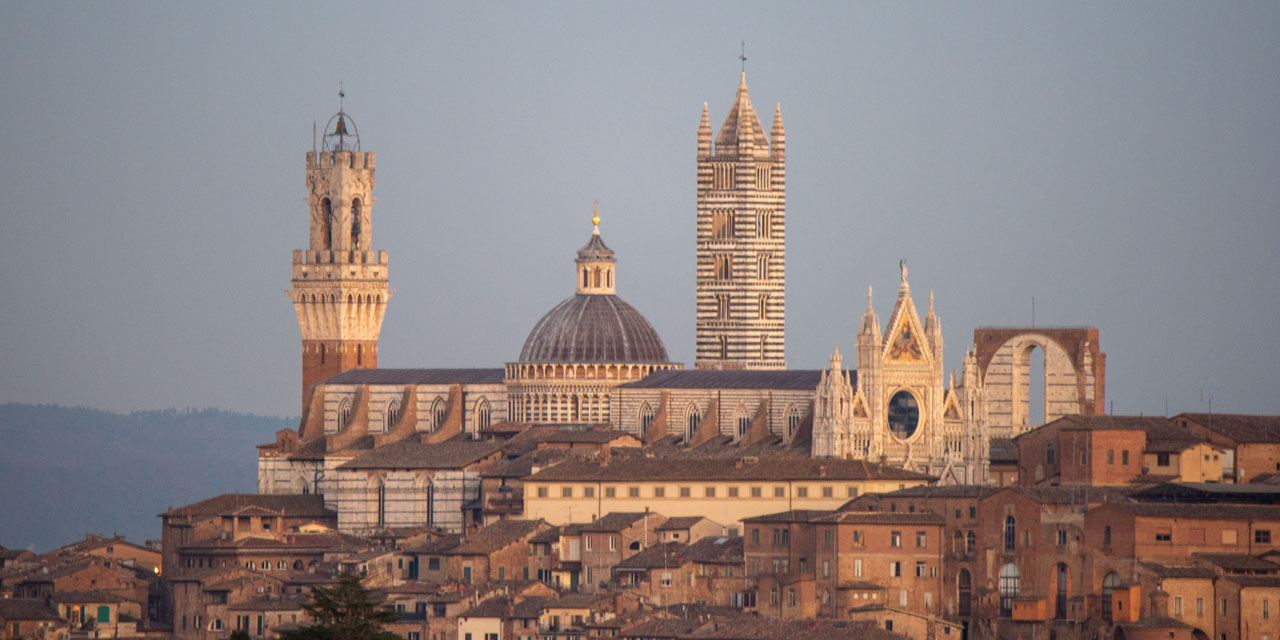
203 km - Altitude gain mt
Strade Bianche Men
Saturday 7 March 2026 203km
Total time: 4:45:15 Withdrawals: 58
order
of arrival
of arrival

winner
POGAČAR Tadej
UAE TEAM EMIRATES XRG
4:45:15

2nd
SEIXAS Paul
DECATHLON CMA CGM TEAM
+ 01:00

3rd
DEL TORO Isaac
UAE TEAM EMIRATES XRG
+ 01:09
Ordine di arrivo
winner
POGAČAR Tadej
UAE TEAM EMIRATES XRG
4:45:15
2°
SEIXAS Paul
DECATHLON CMA CGM TEAM
+ 01:00
3°
DEL TORO Isaac
UAE TEAM EMIRATES XRG
+ 01:09
learn more
technical info
profile
map
technical info
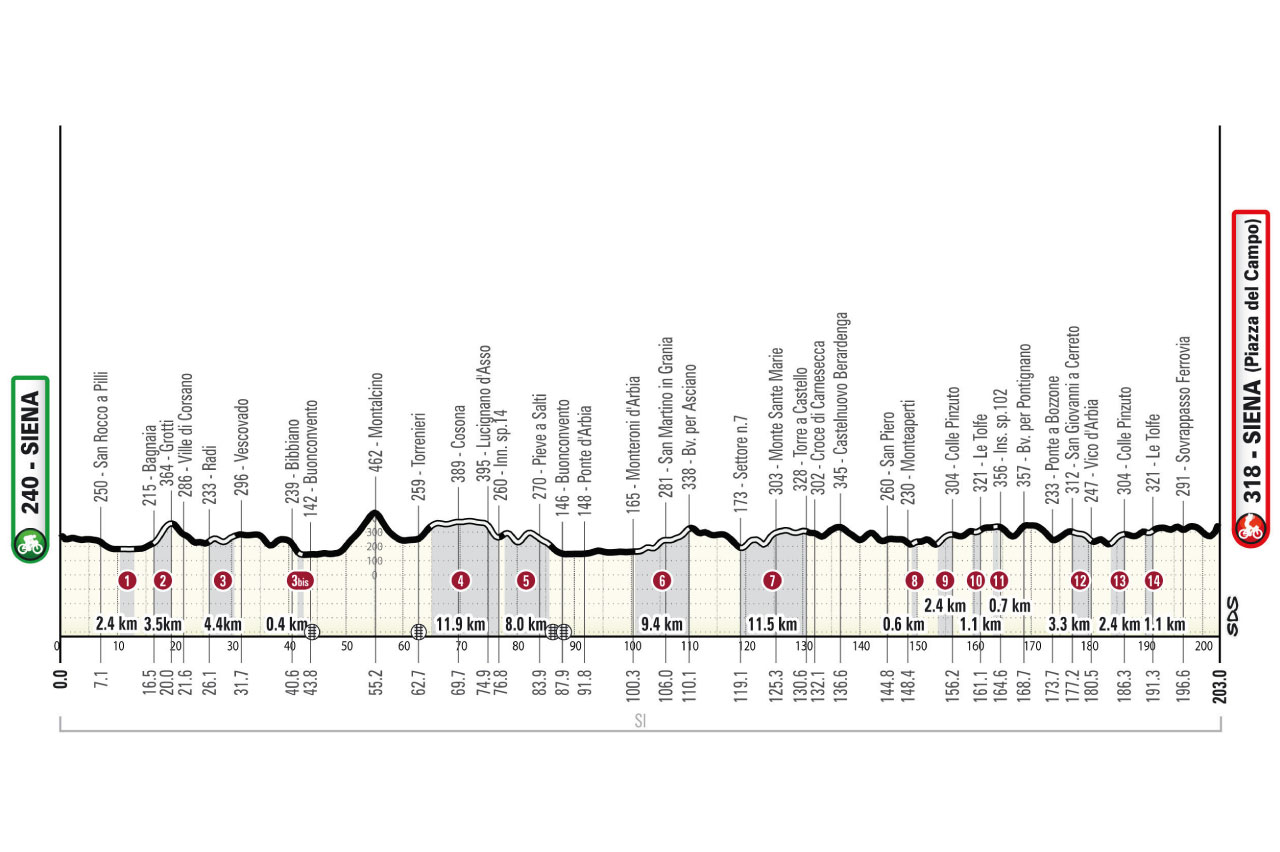
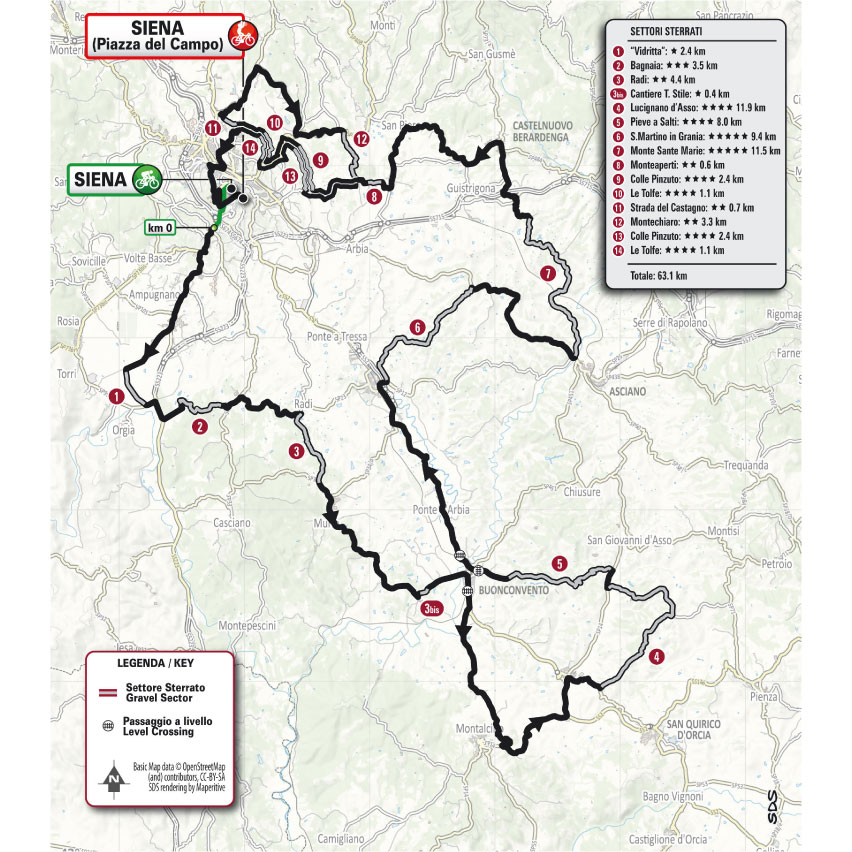
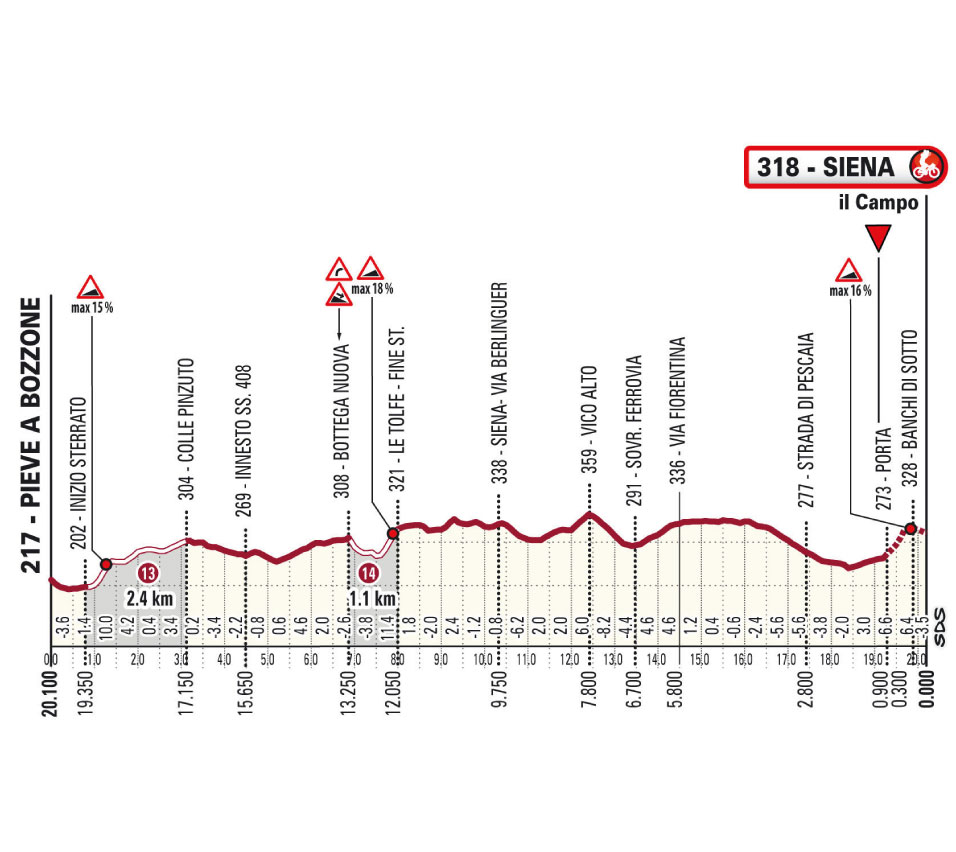
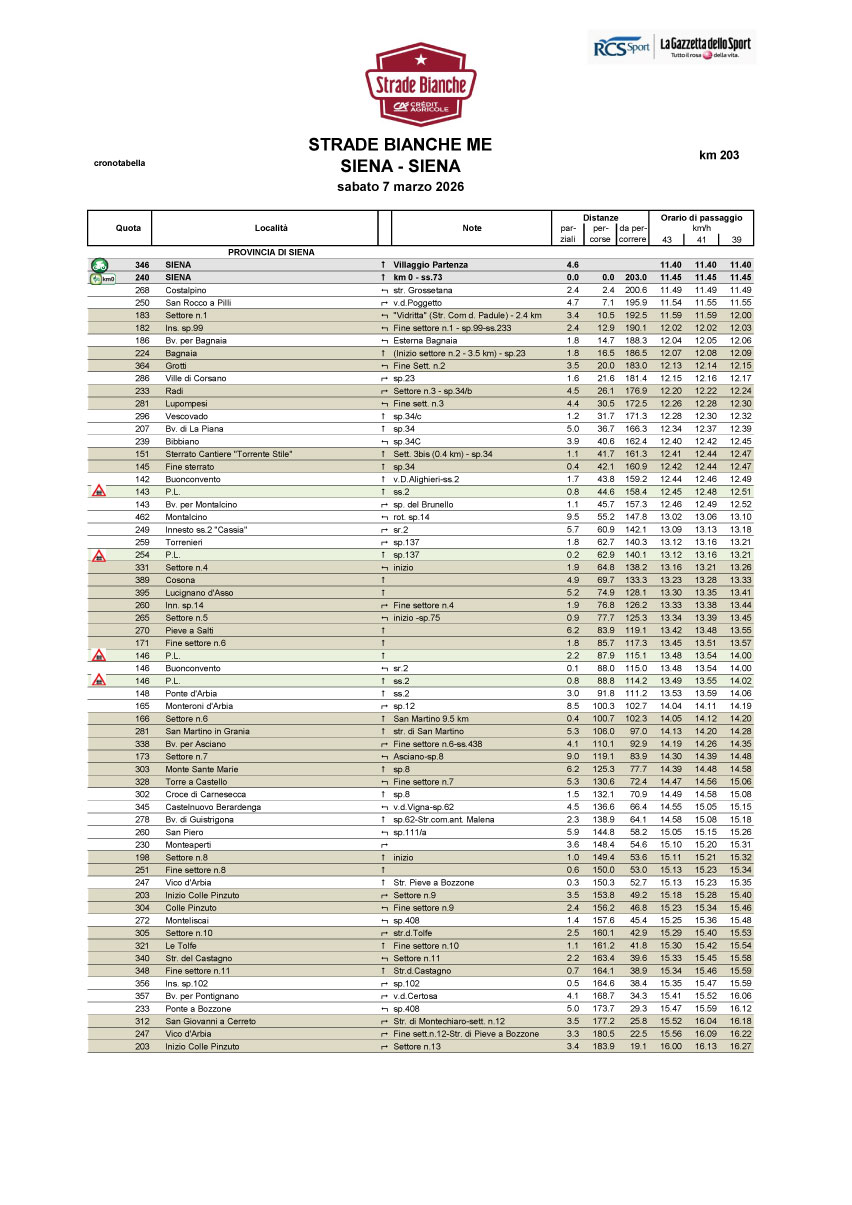
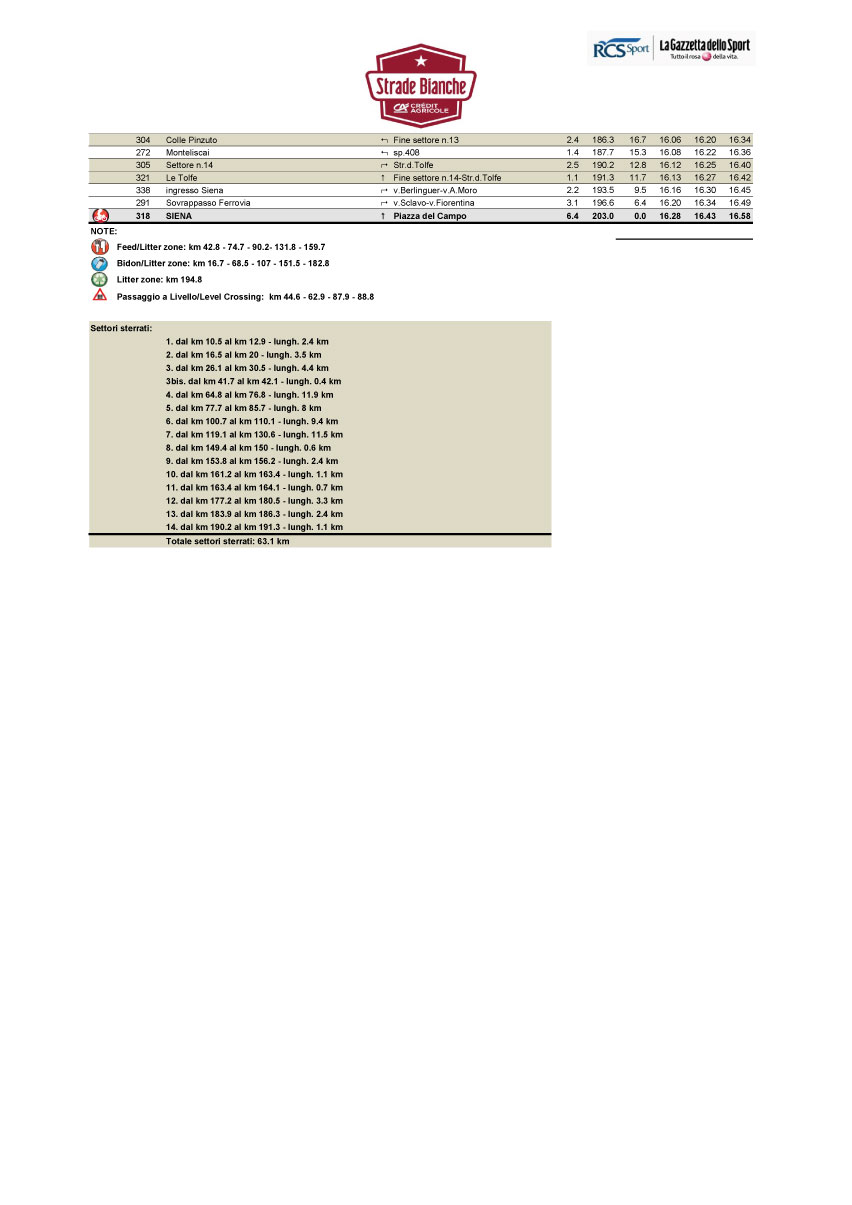
The Men Elite race follows the same philosophy but extends the challenge significantly, with around 64 km of gravel across 14 sectors, 11 of which are shared with the women. After the rolling start from Siena and the first three gravel sectors, the route includes a longer stretch of around 30 km via Buonconvento and the Via Cassia, followed by the asphalted climb to Montalcino, 4 km at 5 percent. After Torrenieri come two demanding gravel sectors of 11.9 km and 8 km, separated by just 1 km of asphalt, both highly technical, undulating and nervous. After a second passage through Buonconvento, the race reaches San Martino in Grania again before tackling the longest and hardest sector of the race at Ponte del Garbo near Asciano, an 11.5 km stretch that is predominantly uphill and includes the brutal ramps of Monte Sante Marie, with very steep gradients both uphill and downhill over short distances. After Castelnuovo Berardenga and Monteaperti, riders face another short but steep 600-metre gravel ramp before entering the same 30 km circuit as the women, which includes Colle Pinzuto, Le Tolfe, the new Strada del Castagno sector and Montechiaro, before repeating Colle Pinzuto and Le Tolfe one final time and heading toward Siena with just over 10 km to go.
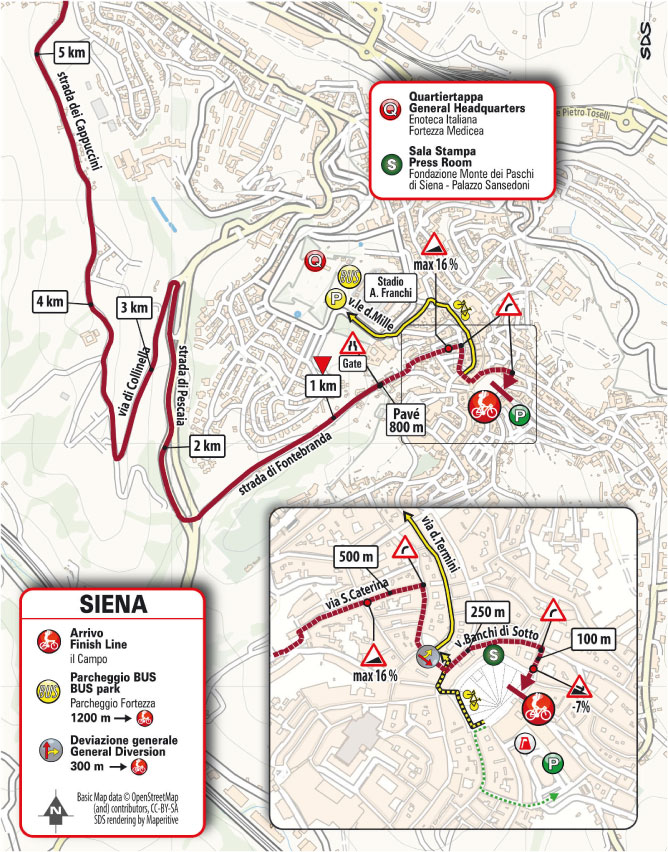
Final Kilometers
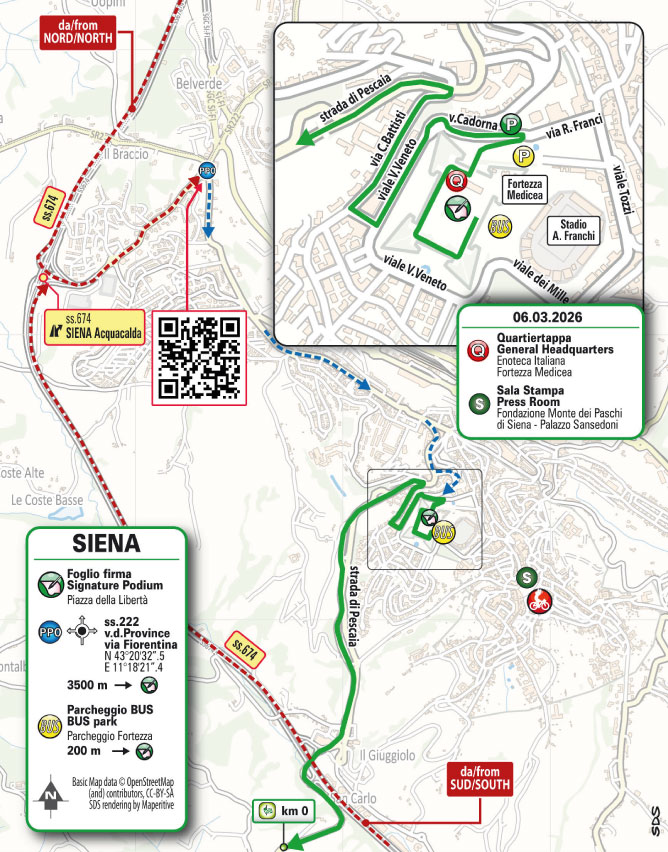
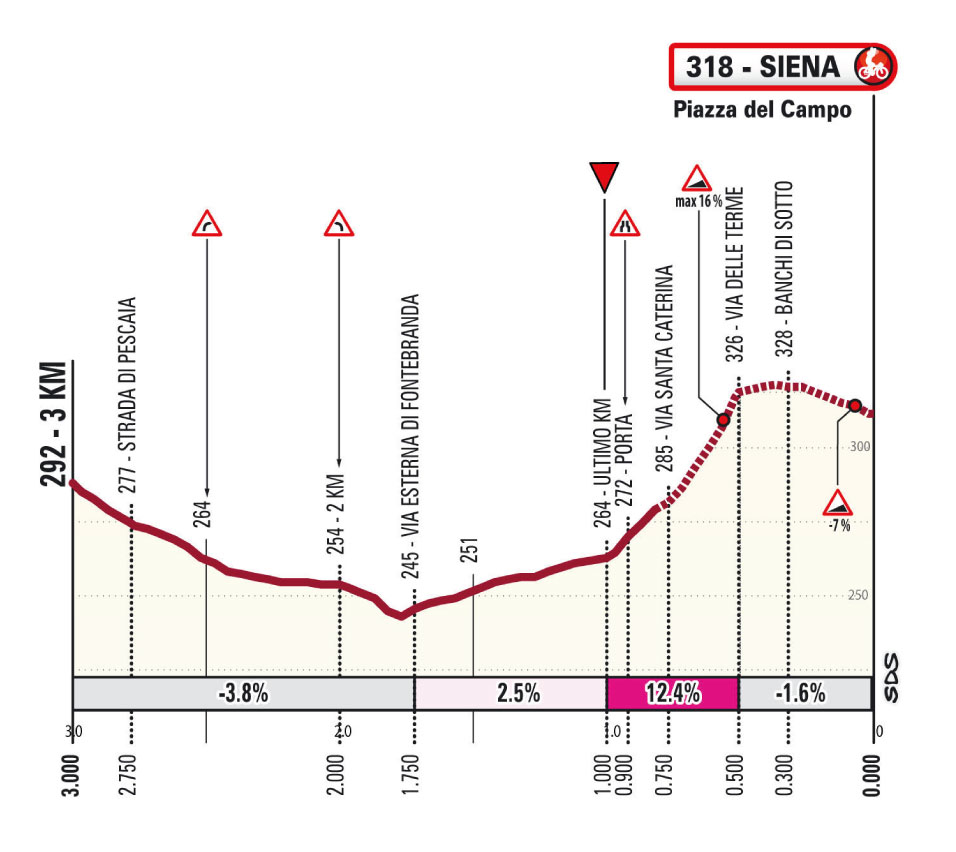
The final kilometres for both races unfold on wide roads outside Siena, with long straights and sweeping bends, first downhill and then gradually uphill, until 2 km from the finish, where Via Esterna di Fontebranda begins with gradients up to 9%. At 900 metres to go the riders pass through Porta di Fontebranda and onto stone paving, with gradients exceeding 10% and peaking at around 16% in Via Santa Caterina, about 500 metres from the line. A sharp right-hand turn leads into Via delle Terme, then onto Via Banchi di Sotto, followed by a slight downhill from 300 metres to go, a right turn into Via Rinaldini at 150 metres, entry into Piazza del Campo at 70 metres, and a final 30 metres downhill at around 7% before the flat finish line.
start / finish
final kilometres
itinerary timetable
Save the dates of your favorite races and receive all the informations about them
tourist info
Host city:
start
finish
Siena
Siena
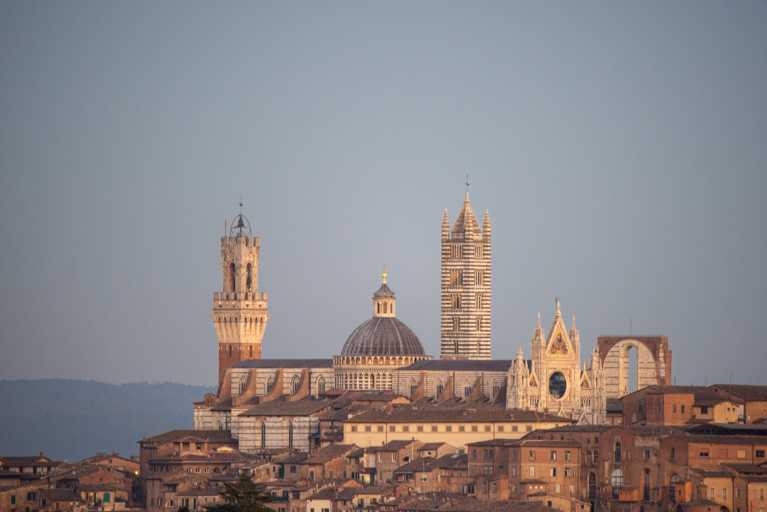
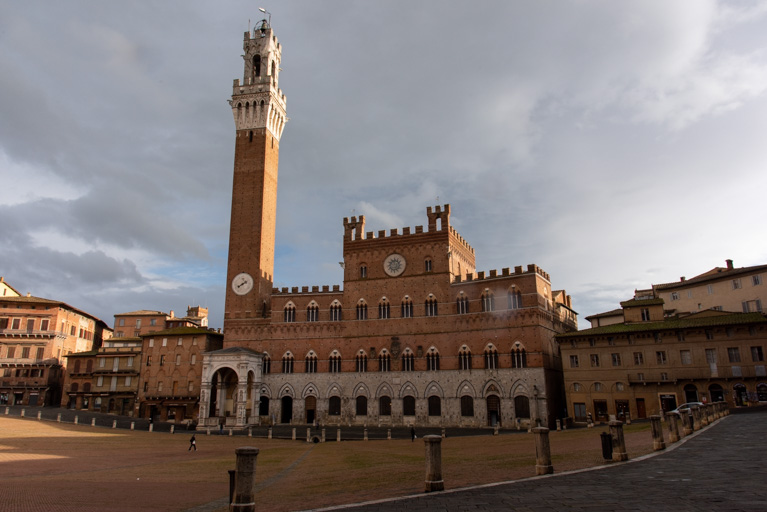
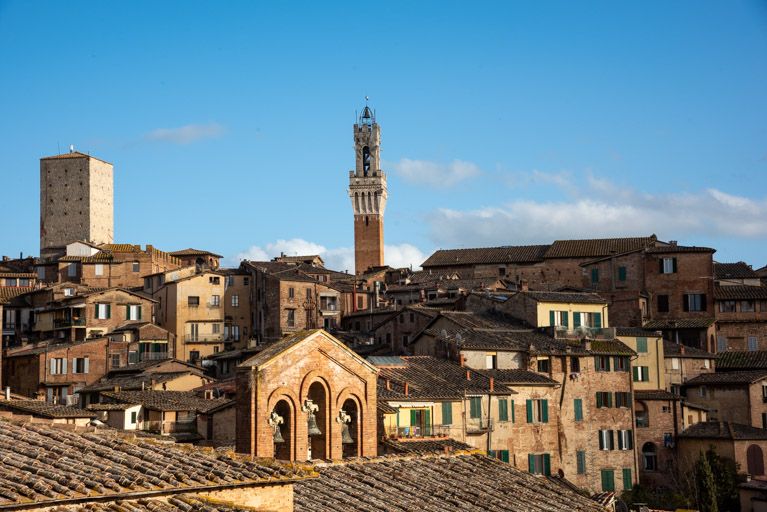
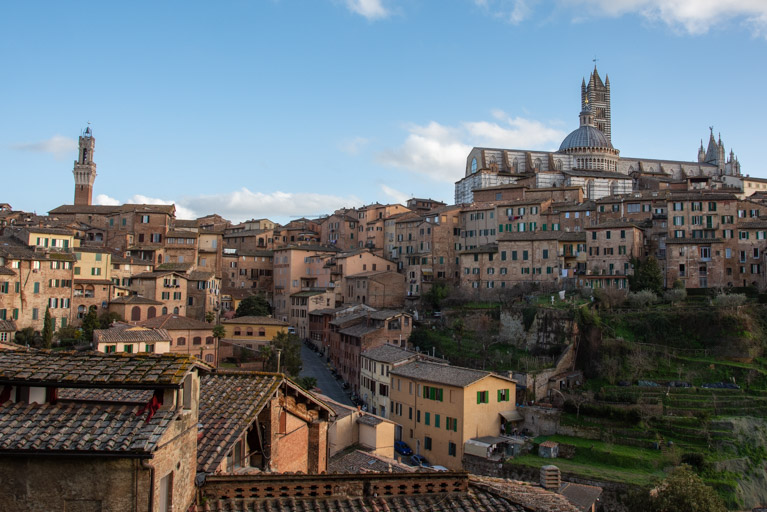
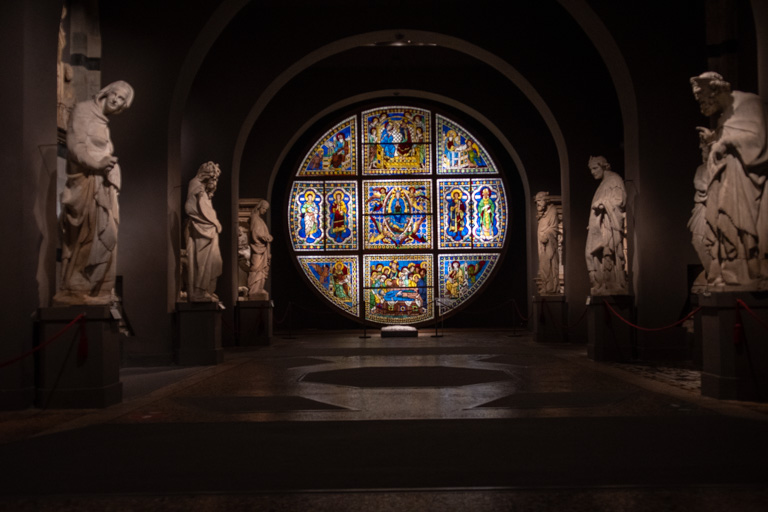
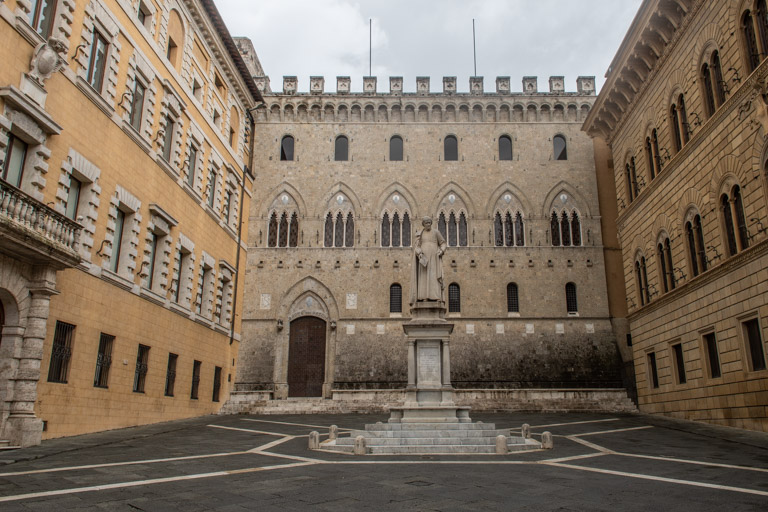
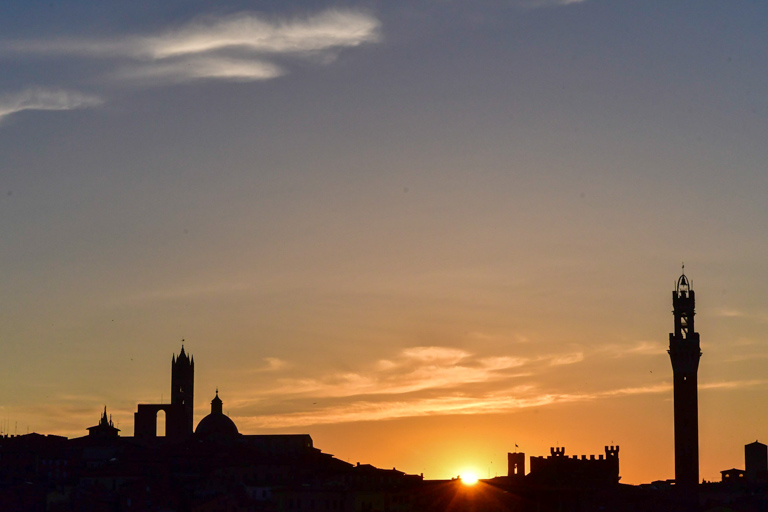
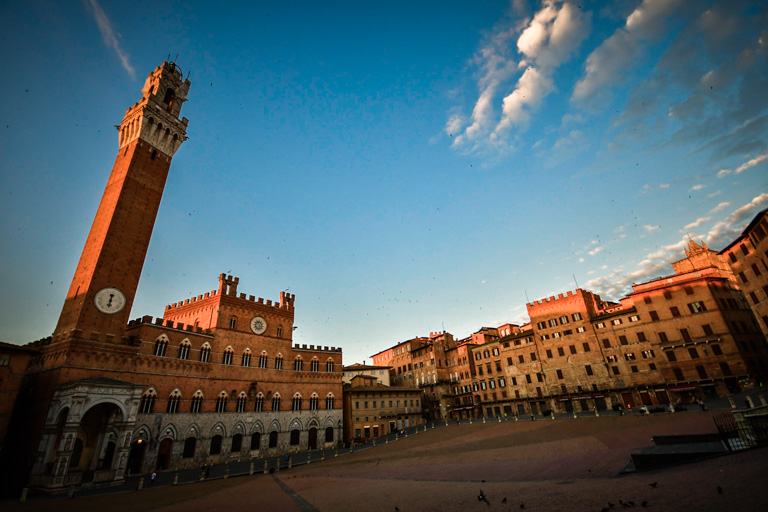
Siena is nestled among the gentle Tuscan hills. Here, it feels as if time has stopped at the 13th century, when the city’s artistic and architectural heritage started to develop, earning Siena its endless renown. It has been on the UNESCO World Heritage List since 1995, owing to its well-preserved mediaeval structure. The main square, Piazza del Campo, is the mandatory starting point to describe the city. The square has a unique shell shape, and gently slopes towards the centre. This is where the famous Palio takes place: every year, in summer, the different Contrade (city quarters) challenge each other in a compelling horse race. All around are a number of monumental buildings, such as Palazzo Sansedoni and Palazzo Pubblico. Towering over the square is the majestic Torre del Mangia, built in the 1340s. Soaring an impressive 102 metres, it is just as tall as the Duomo belfry, to symbolize the balance between worldly and divine power. But there is more to Siena than just Piazza del Campo, including little streets and alleys teeming with little shops and craft stores where you can buy local handmade products or taste the famous cantucci cookies with a glass of Vin Santo. Throughout the narrow alleys, all the way to the wide Piazza del Campo, you can actually feel the real atmosphere of this city – contemporary yet ancient, monumental yet lively, all of which makes it the perfect setting for the start and finish of this iconic bicycle race. (Ph. Credits Antonio Cinotti)
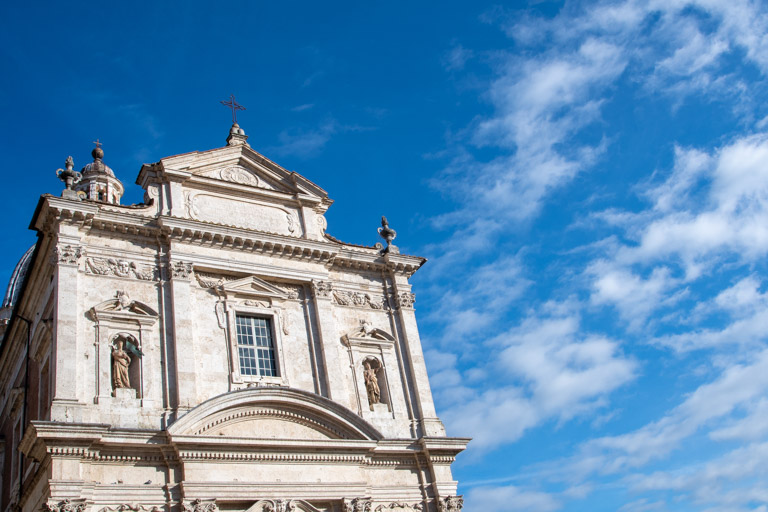
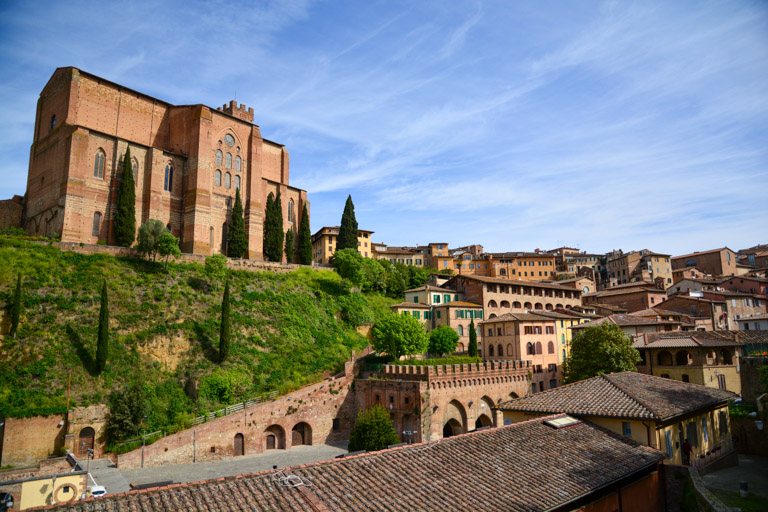
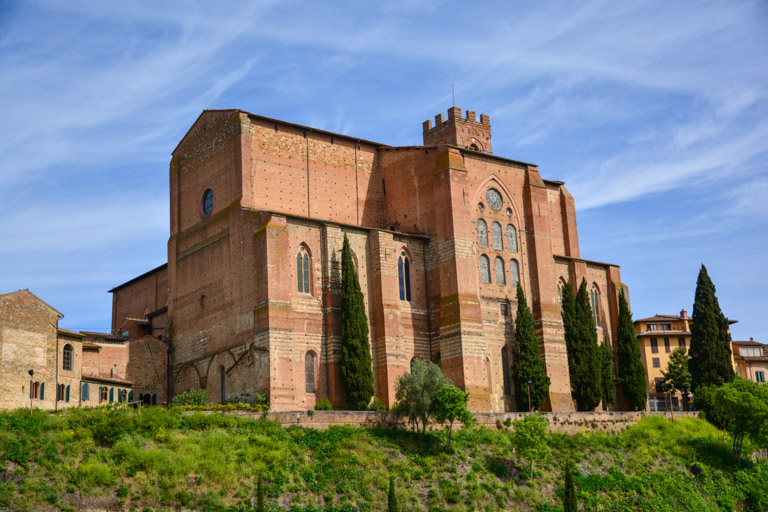
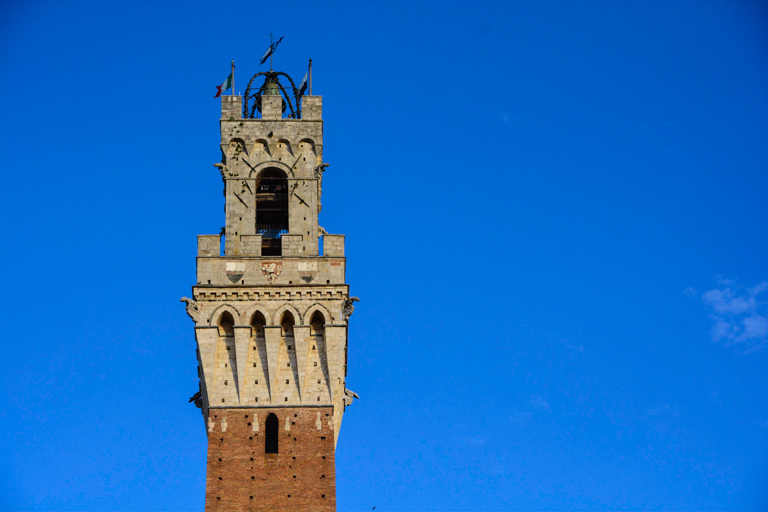
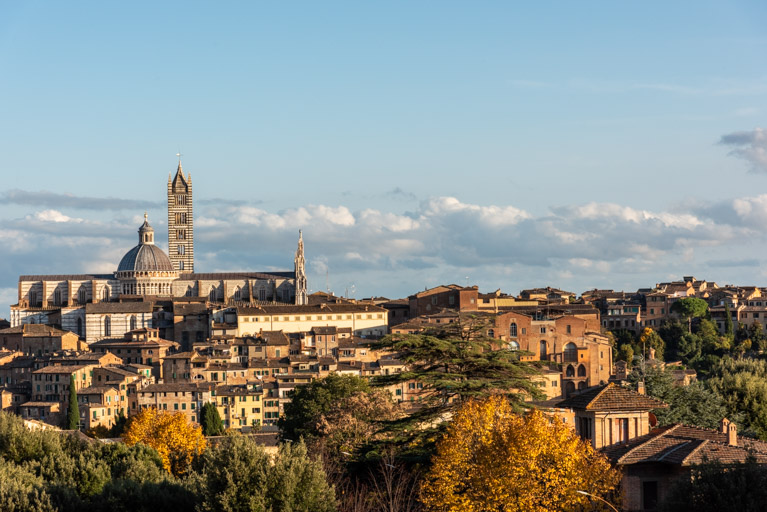
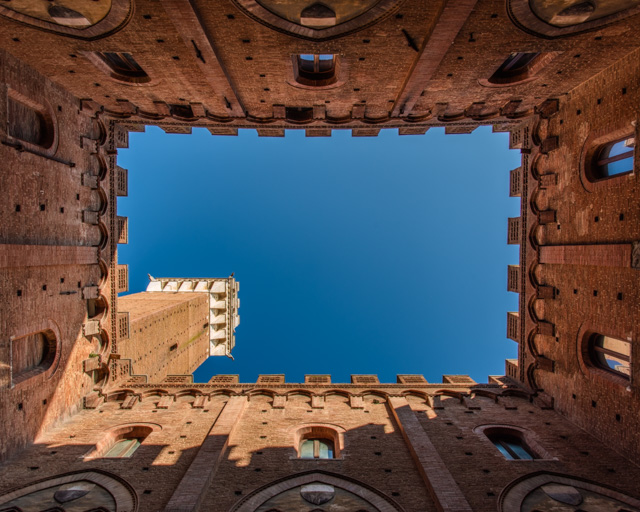
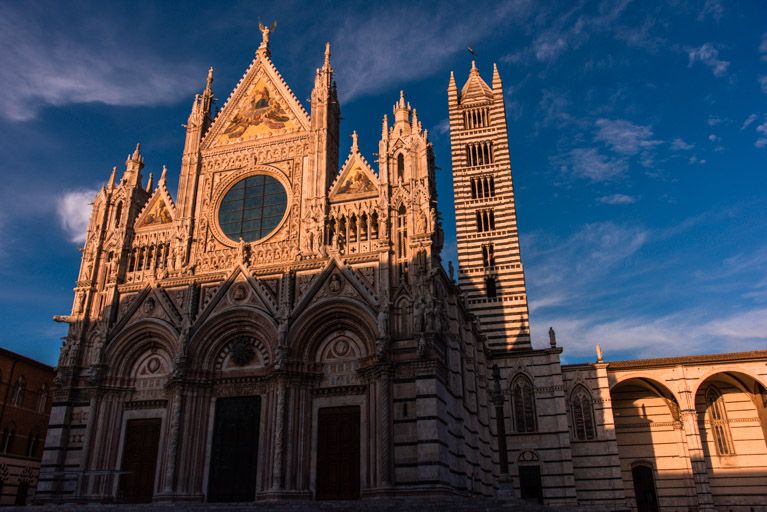
Sovicille
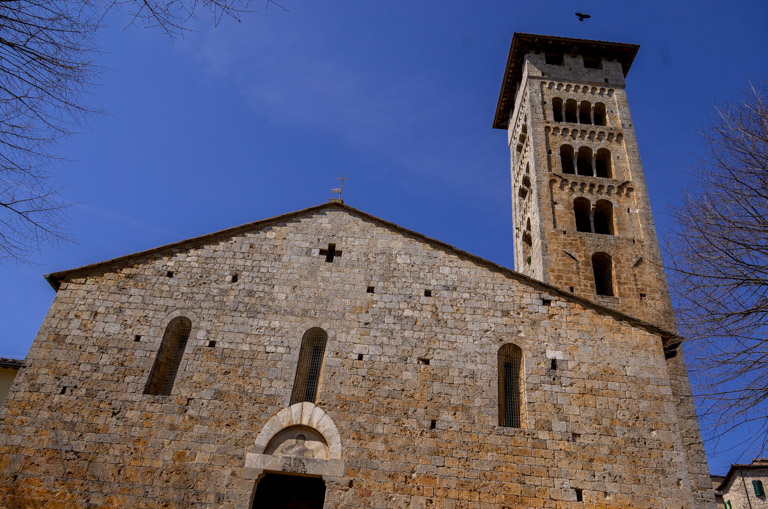
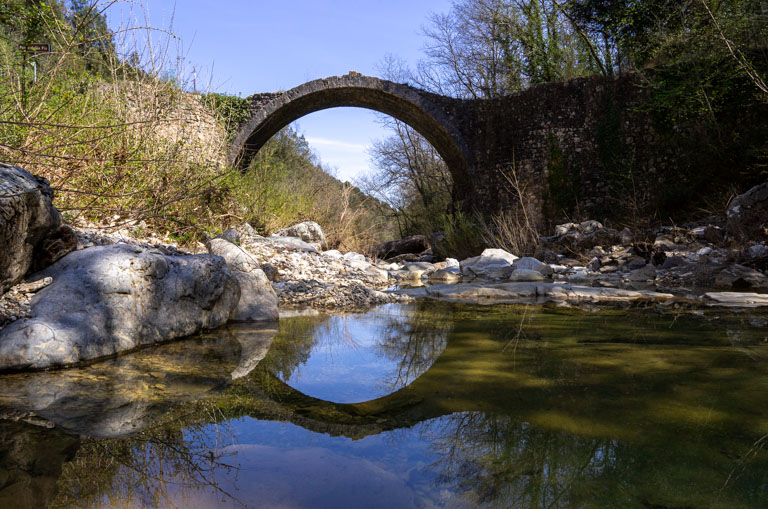
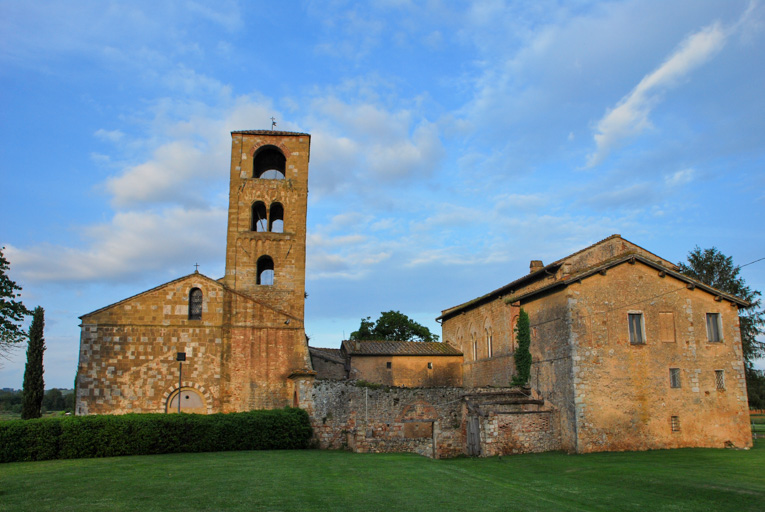
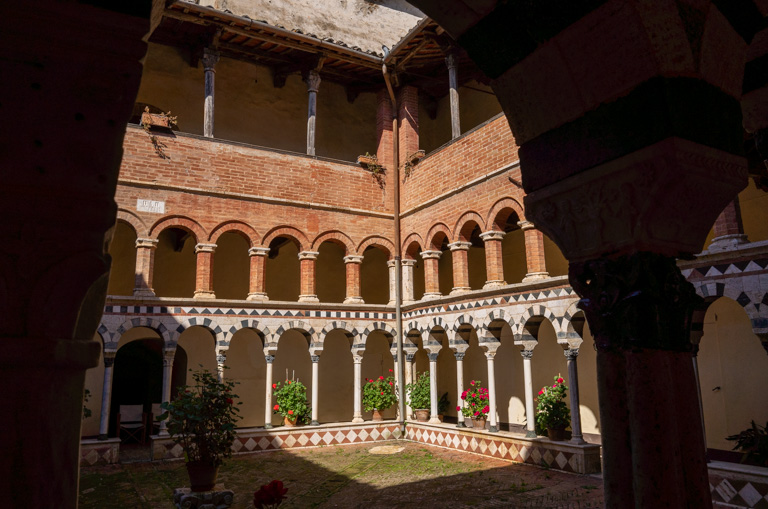
Lying at the southern slopes of the Montagnola Senese, Sovicille is the Tuscan town with the highest concentration of parish churches, abbeys, castles and villas. Valuable examples of the Romanesque style are the Pieve (parish church) of Ponte allo Spino, Ponte della Pia, and the polychrome cloister of the Abbey of Torri. The fairy-tale castle of Celsa and the grandiose Villa di Cetinale (a former possession of the Chigi family) are bound to leave you breathless with their charm and grandeur. (Ph. Credits Antonio Cinotti)
Monteroni d'Arbia
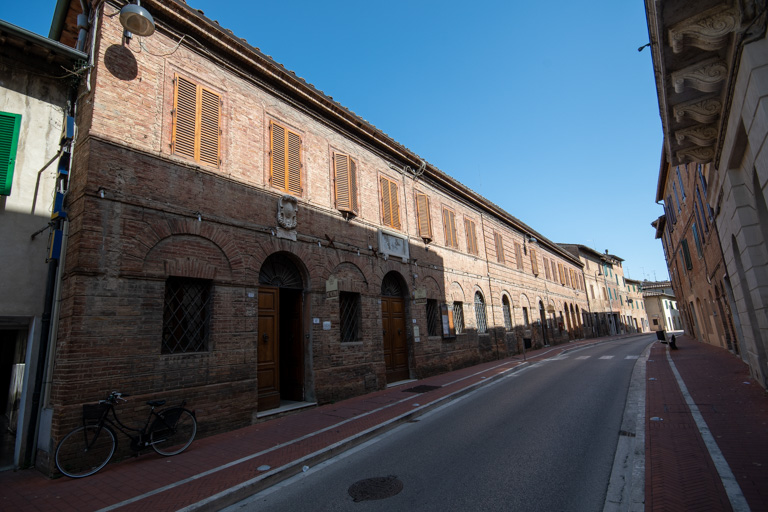
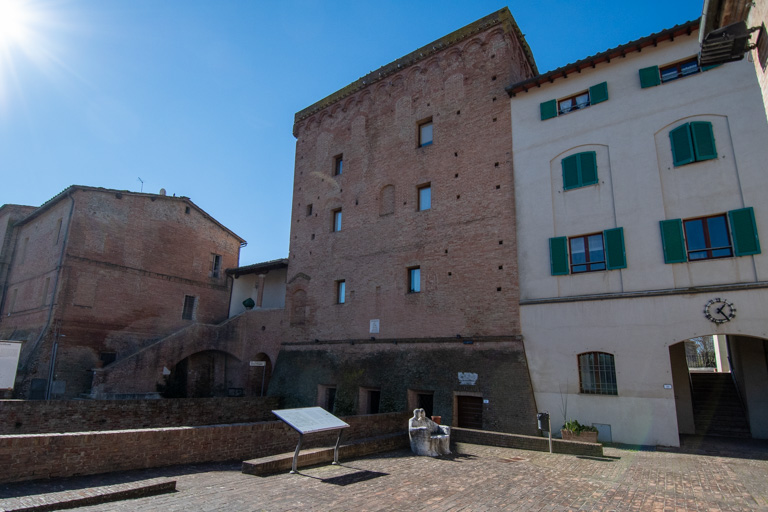
The Via Francigena runs through the entire municipal territory of Monteroni d’Arbia. Many historical landmarks can be found along this ancient route, including the castle of Lucignano d’Arbia and its parish church, which already existed back in 913 a.D., and the famous Grancia di Cuna, a majestic fortified farm built in 1314. (Ph. Credits Antonio Cinotti)
Murlo
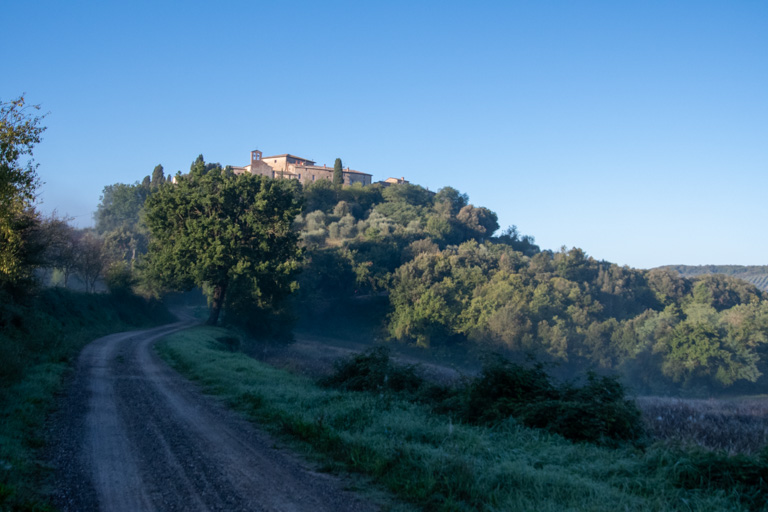
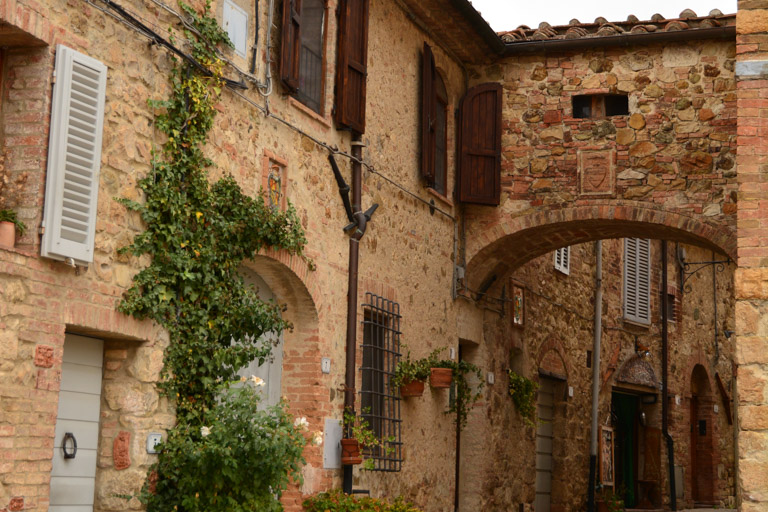
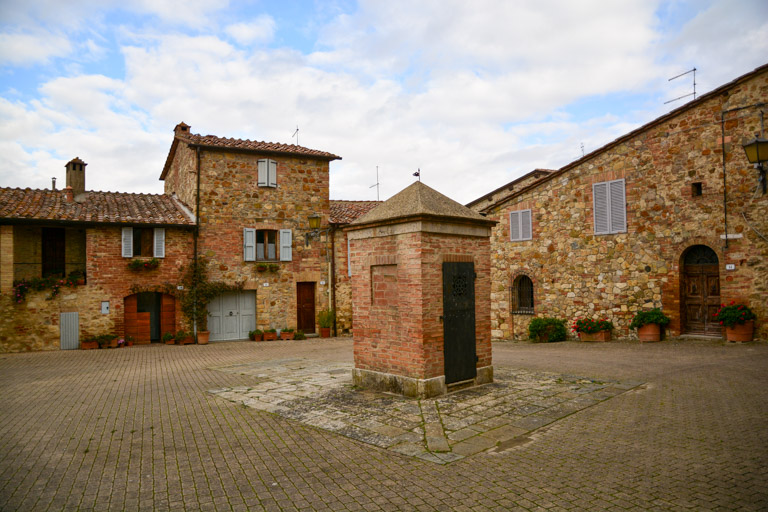
Murlo is a little, well-preserved mediaeval village lying at the heart of an unspoilt territory. Its inhabitants were found to be the actual descendants of the ancient Etruscans. The village is best known for being home to a unique Etruscan settlement on the surrounding hills: a large princely building surrounded by craft workshops, one of the major findings about this civilisation. (Ph. Credits Antonio Cinotti)
Buonconvento
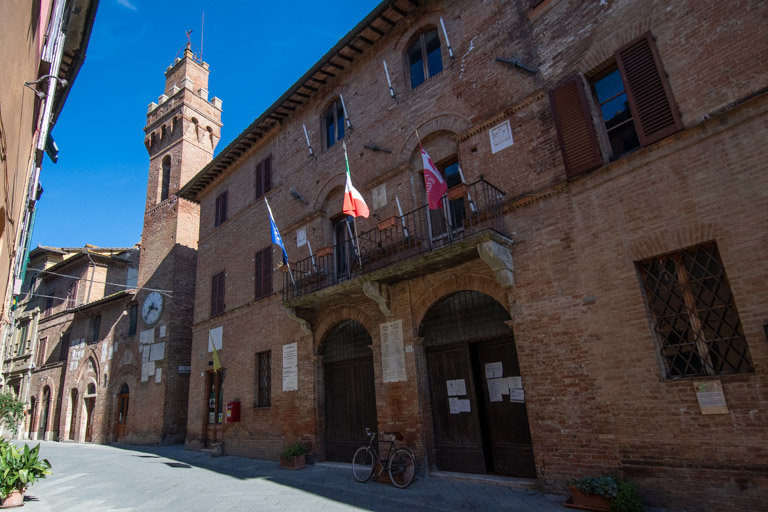
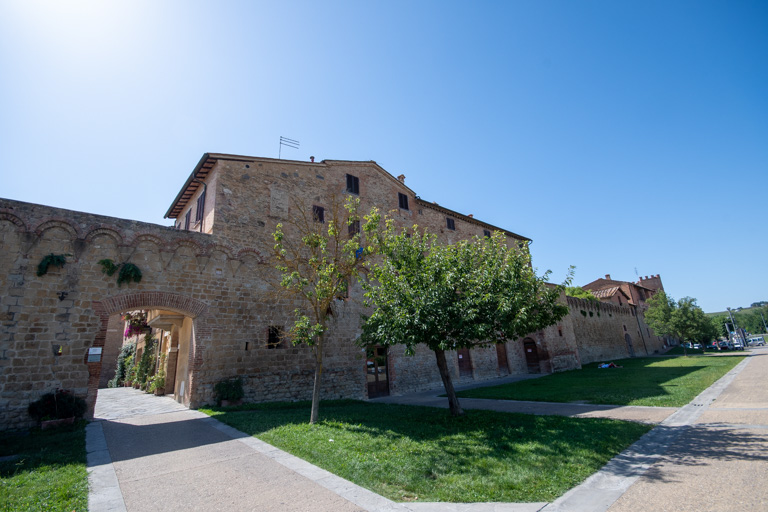
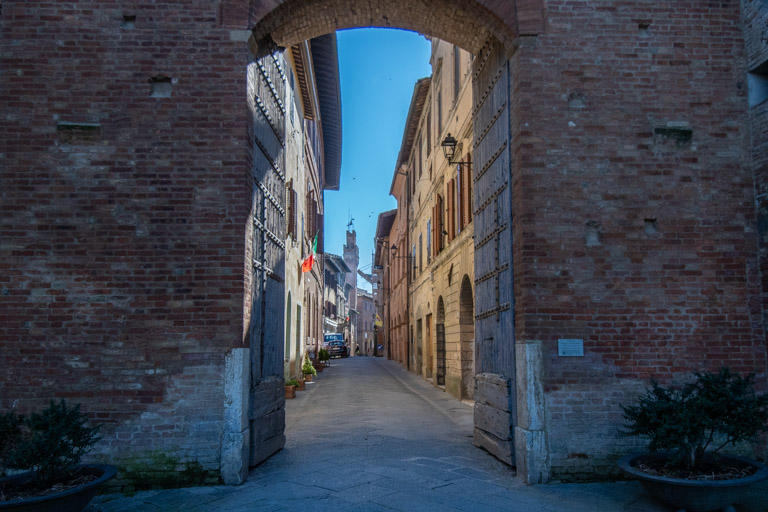
The village of Buonconvento is still surrounded by the ancient defensive walls, and has retained its original mediaeval appearance. Major landmarks include the belfry (Torre Civica) of the ancient government palace, Palazzo Podestarile. However, wandering the streets of the town is just as evocative, especially in September, when the famous Sagra della Valdarbia brings the love for good food, music, arts and literature together. (Ph. Credits Antonio Cinotti)
Montalcino
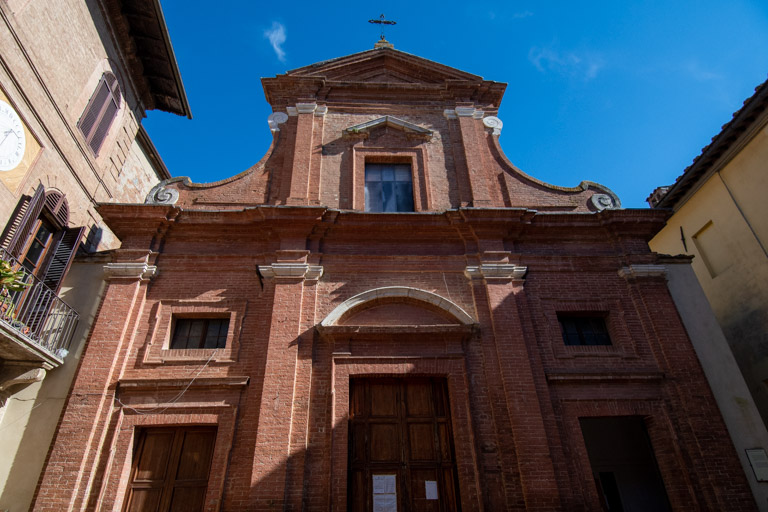
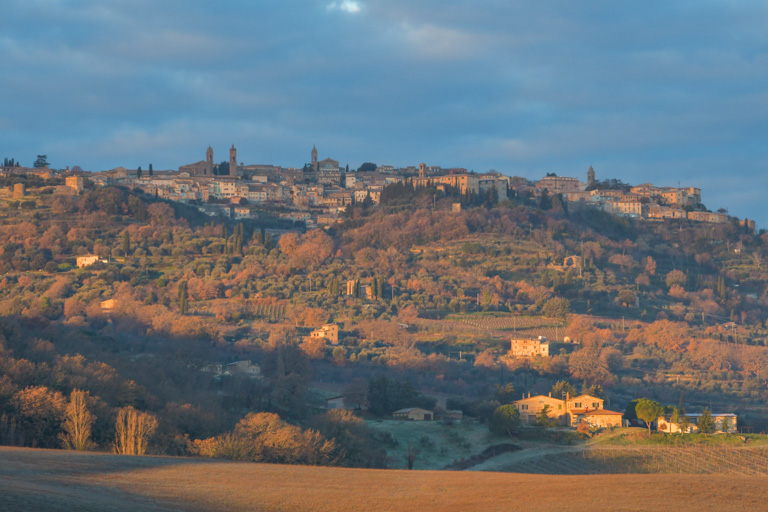
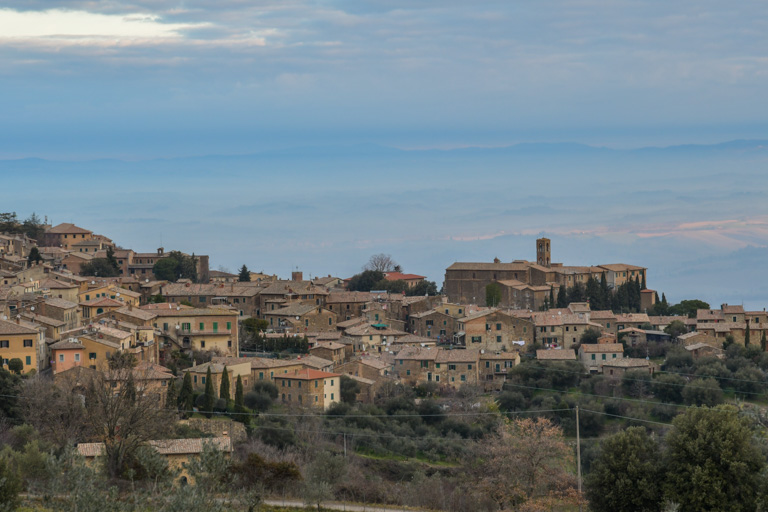
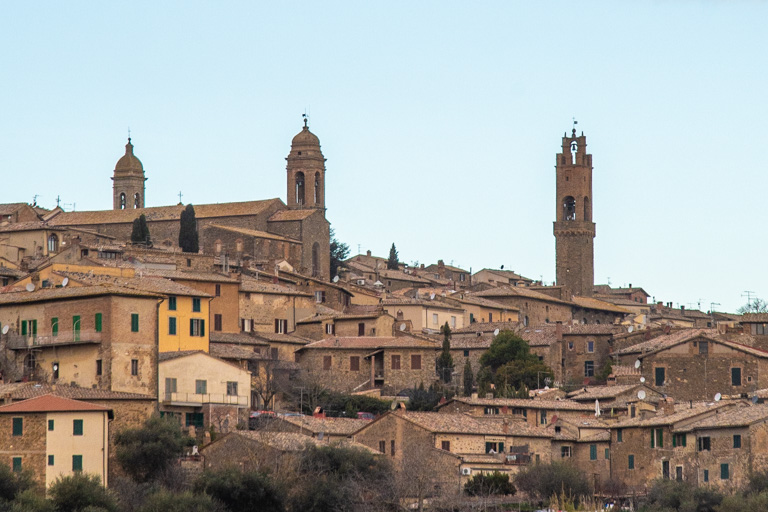
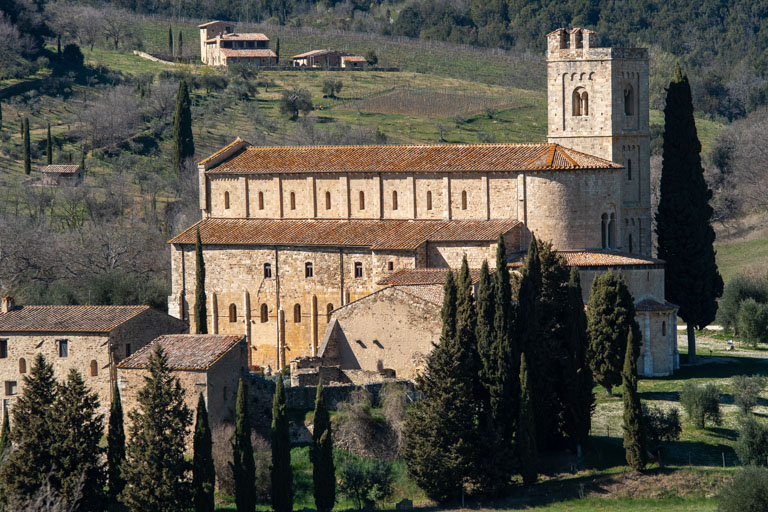
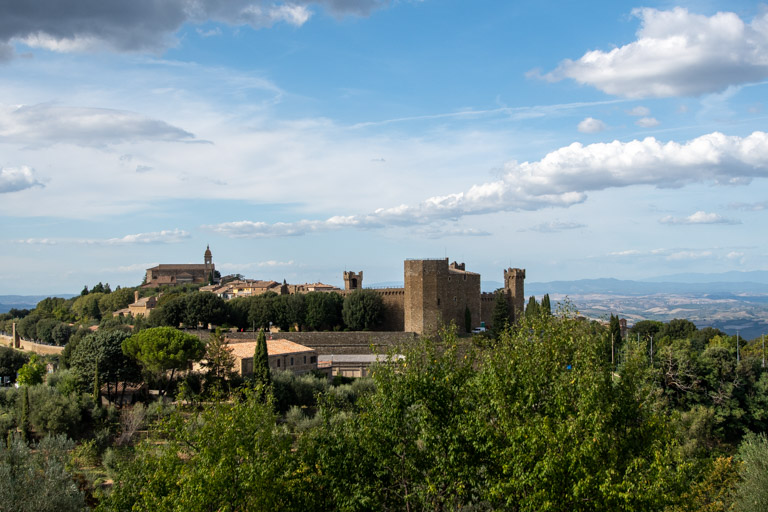
Founded by the Etruscans and best known for Brunello wine, Montalcino is a lovely village lying at the mouth of Val d’Orcia. Major landmarks include the 14th century pentagonal fortress with its towers, and a museum housing a collection of late mediaeval art. The Abbey of Sant’Antimo, one of the major examples of Tuscan Romanesque architecture, is a must-see. (Ph. Credits Antonio Cinotti)
San Quirico d’Orcia
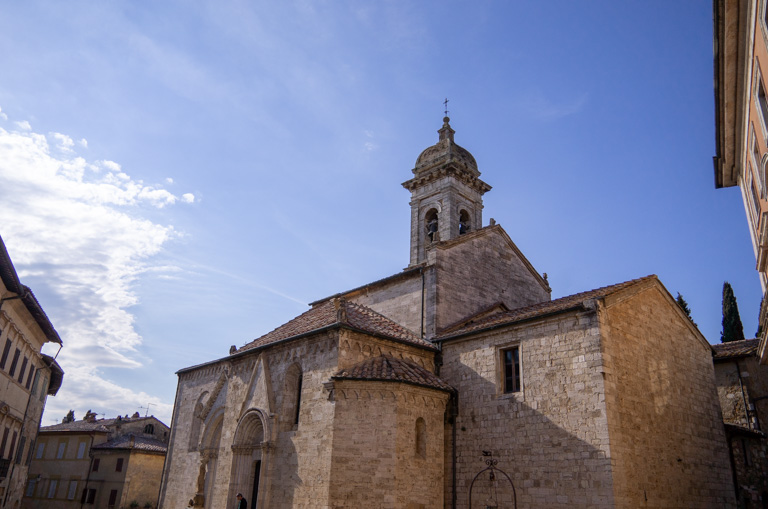
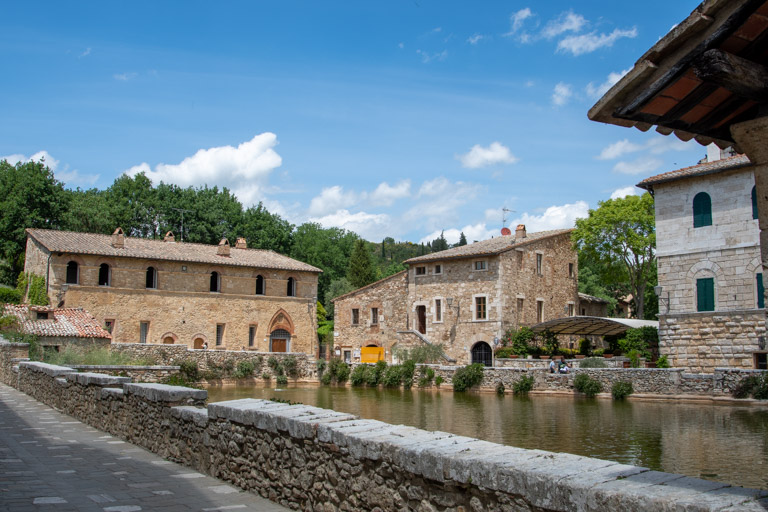
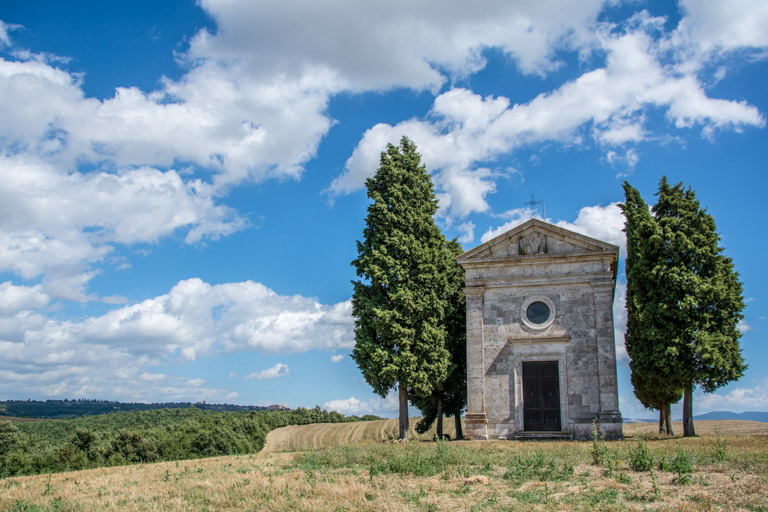
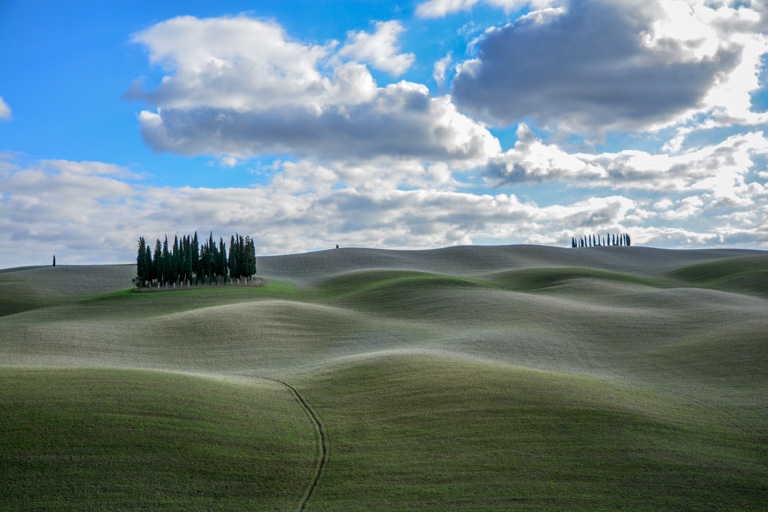
San Quirico d’Orcia lies at the heart of a World Heritage landscape that embodies the essence of the Val d’Orcia. The impressive Horti Leonini, created around 1580, are the most popular attraction. Major architectural landmarks also include the Osenna collegiate or parish church (dating back to the 12th-13th century). Bagno Vignoni, the only hamlet in San Quirico d’Orcia, is home to Piazza delle Sorgenti, a large, rectangular 16th century hot spring which is definitely worth a visit. (Ph. Credits Antonio Cinotti)
Pienza
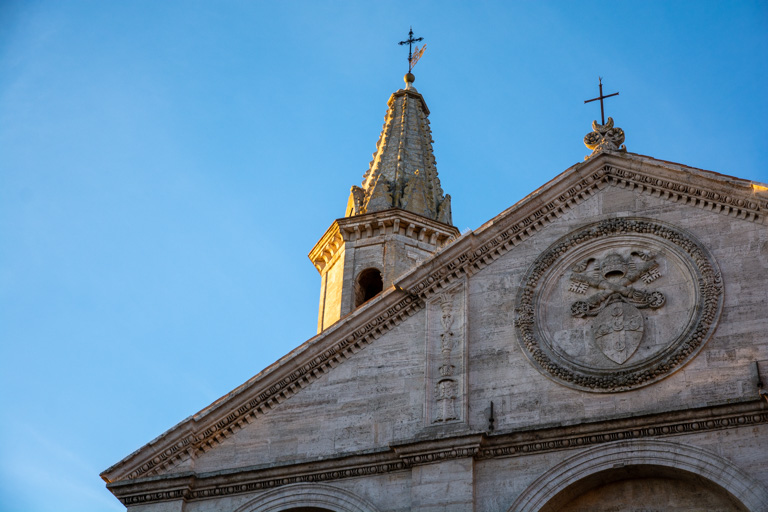
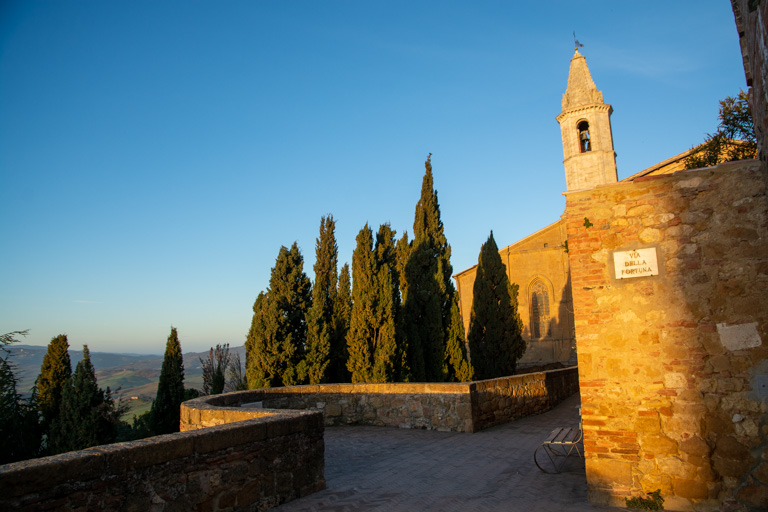
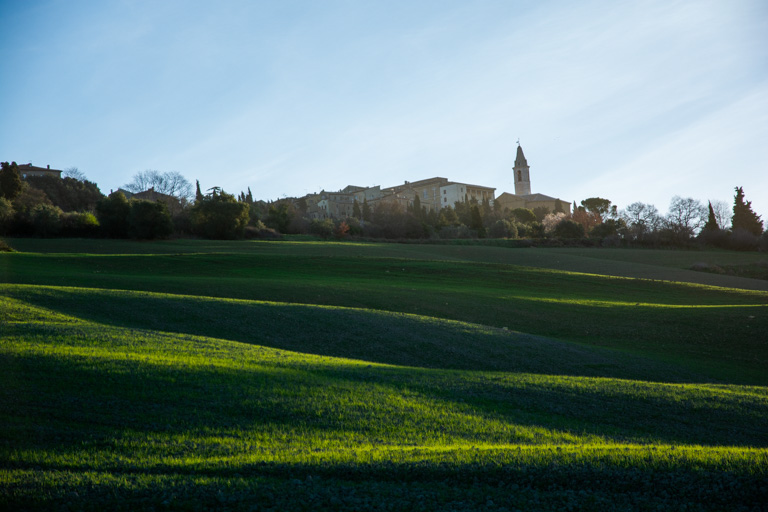
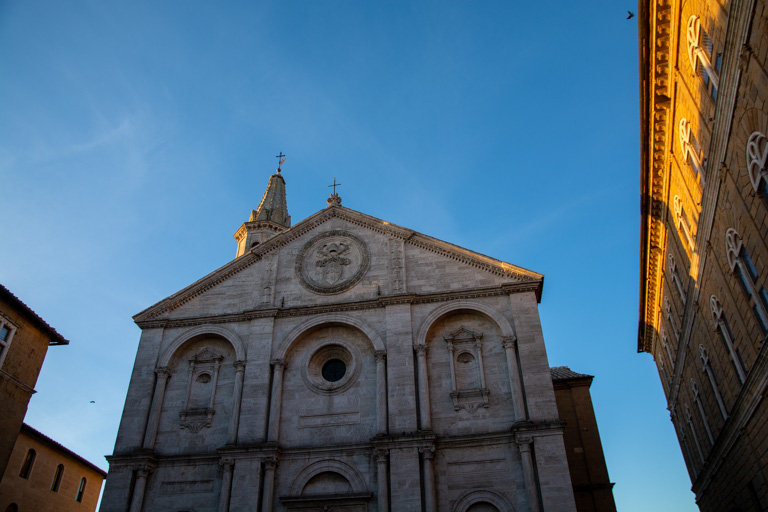
A UNESCO World Heritage site since 1996, Pienza was hometown to Pope Pius II, who considered it the “ideal” city of the Renaissance. The projects that were conceived at that time are a significant example of the rational urban architecture of the Italian Renaissance, although not all of them were actually implemented. Taking a walk through Piazza Pio II to visit Palazzo Piccolomini and the cathedral is something you cannot miss. (Ph. Credits Antonio Cinotti)
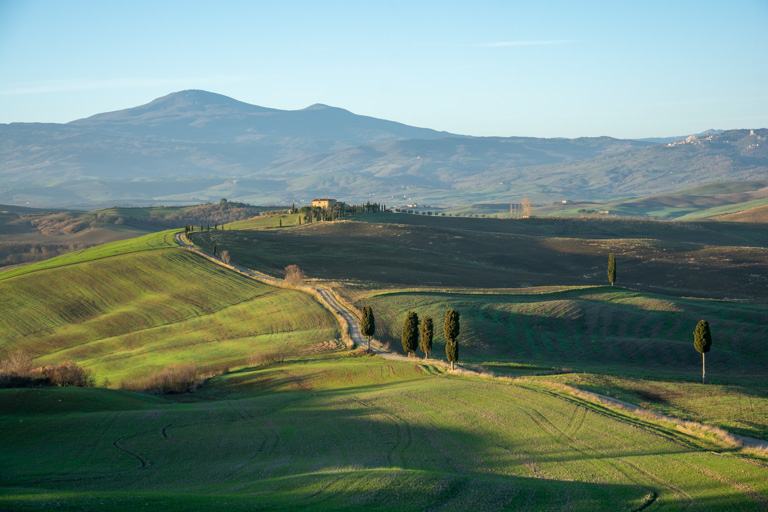
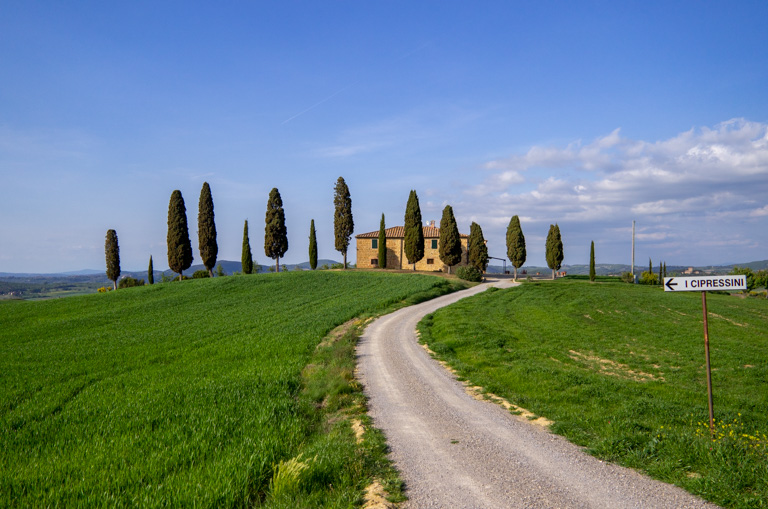
Asciano
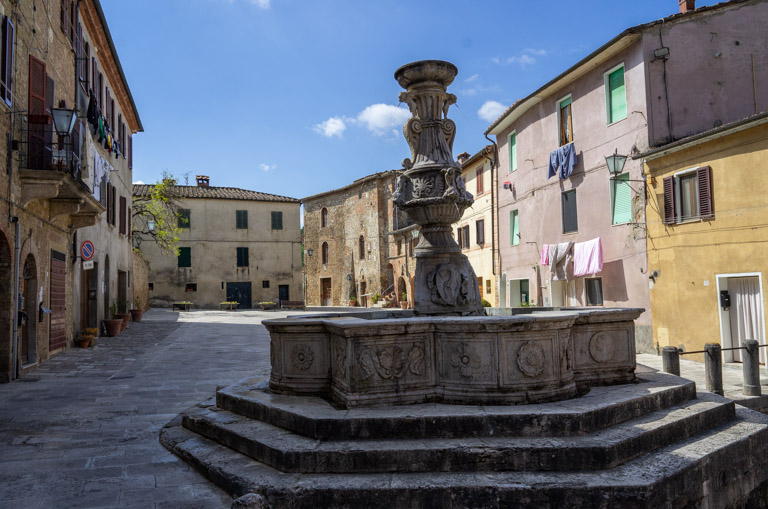
Lying at the heart of the Crete Senesi, and surrounded by breath-taking landscapes, Asciano is an ancient Etruscan village that experienced its greatest splendour during the Middle Ages. The old town centre is a treasure trove of art and history, where traditions and legends merge inseparably. (Ph. Credits Antonio Cinotti)
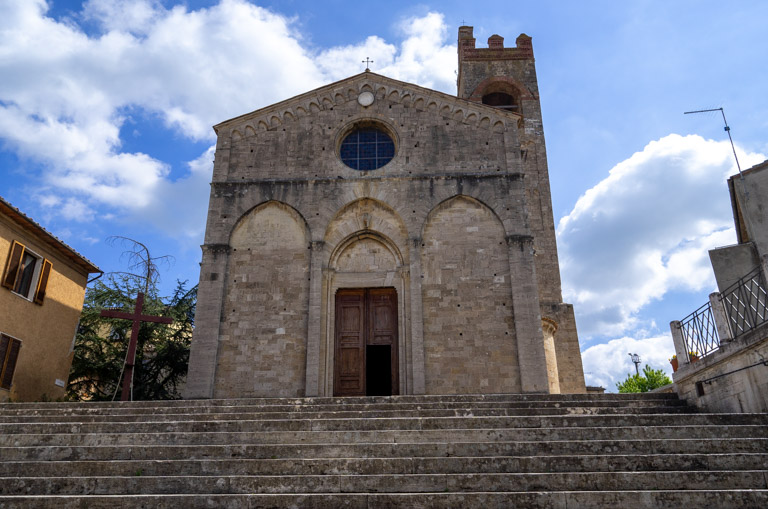
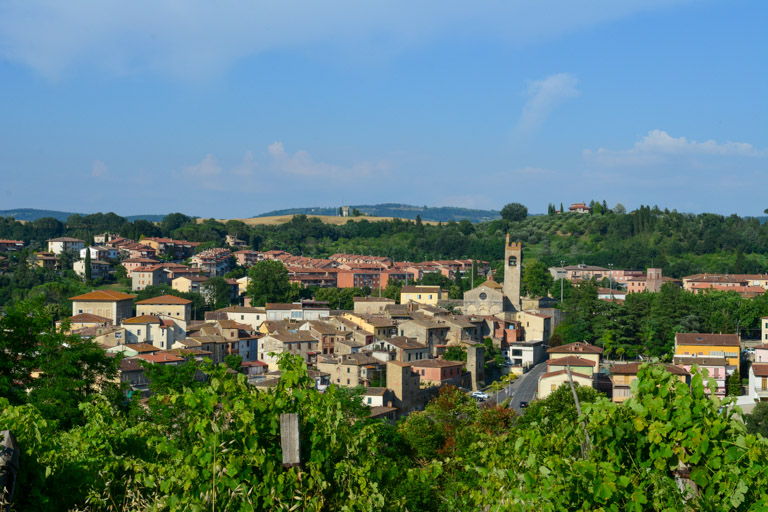
Castelnuovo Berardenga
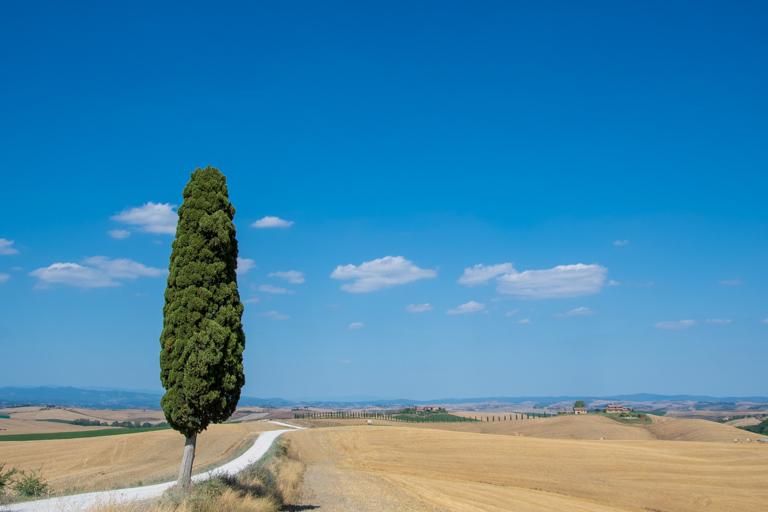
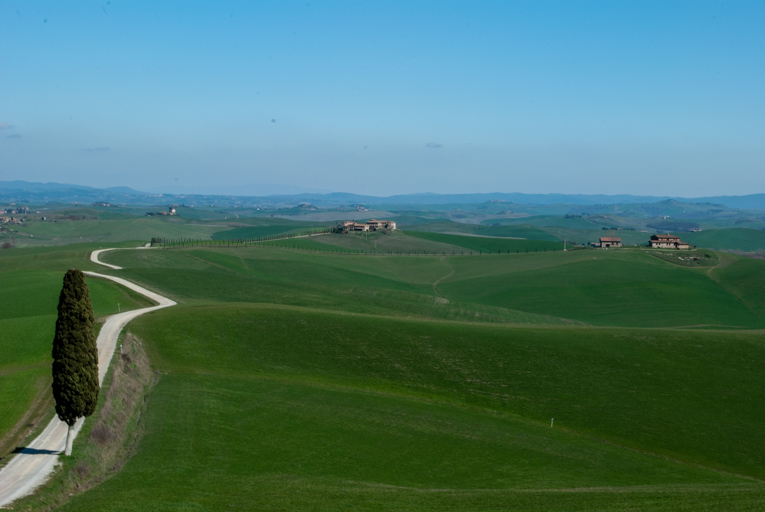
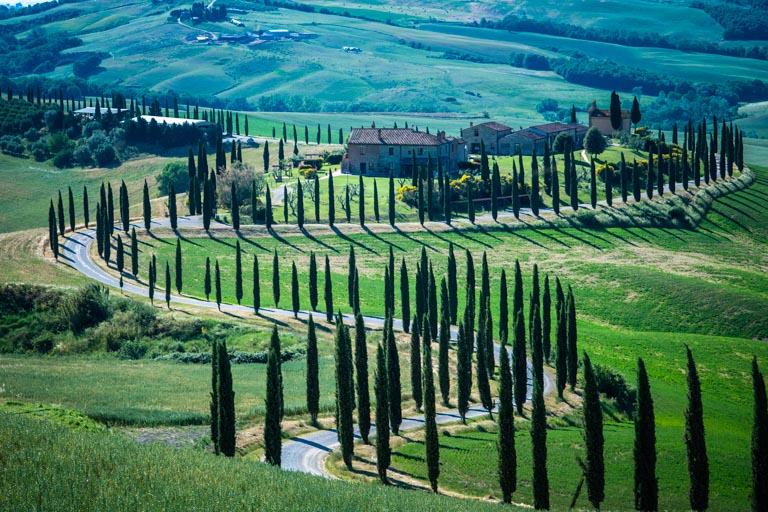
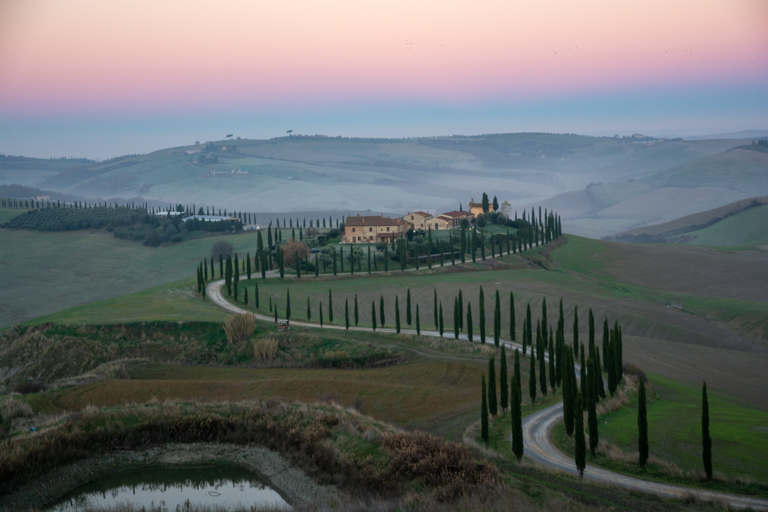
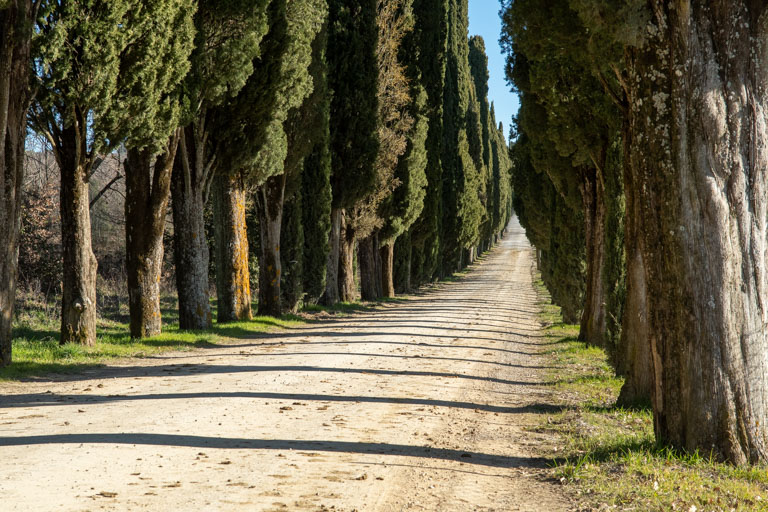
Castelnuovo Berardenga is the southernmost town of the Chianti area. Its territory is a unique combination of gentle slopes and uneven hills, guarded by castles, churches and fortifications, with cypress-lined alleys leading the way. In 1260, the battle of Monteaperti, won by Siena and its allies against Florence, marked the beginning of the Ghibelline rule over Tuscany, and invested Siena with a political and economical predominant role, both in Italy and in Europe. (Ph. Credits Antonio Cinotti)
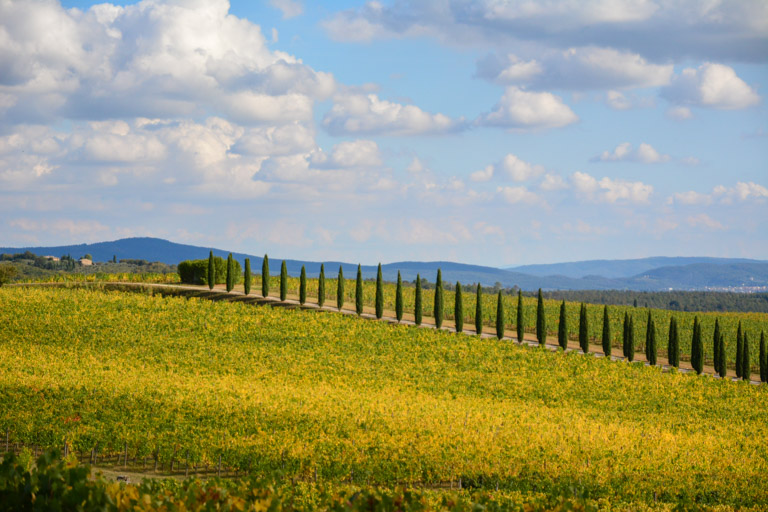
Siena
Siena
Siena is nestled among the gentle Tuscan hills. Here, it feels as if time has stopped at the 13th century, when the city’s artistic and architectural heritage started to develop, earning Siena its endless renown. It has been on the UNESCO World Heritage List since 1995, owing to its well-preserved mediaeval structure. The main square, Piazza del Campo, is the mandatory starting point to describe the city. The square has a unique shell shape, and gently slopes towards the centre. This is where the famous Palio takes place: every year, in summer, the different Contrade (city quarters) challenge each other in a compelling horse race. All around are a number of monumental buildings, such as Palazzo Sansedoni and Palazzo Pubblico. Towering over the square is the majestic Torre del Mangia, built in the 1340s. Soaring an impressive 102 metres, it is just as tall as the Duomo belfry, to symbolize the balance between worldly and divine power. But there is more to Siena than just Piazza del Campo, including little streets and alleys teeming with little shops and craft stores where you can buy local handmade products or taste the famous cantucci cookies with a glass of Vin Santo. Throughout the narrow alleys, all the way to the wide Piazza del Campo, you can actually feel the real atmosphere of this city – contemporary yet ancient, monumental yet lively, all of which makes it the perfect setting for the start and finish of this iconic bicycle race.
Sovicille
Lying at the southern slopes of the Montagnola Senese, Sovicille is the Tuscan town with the highest concentration of parish churches, abbeys, castles and villas. Valuable examples of the Romanesque style are the Pieve (parish church) of Ponte allo Spino, Ponte della Pia, and the polychrome cloister of the Abbey of Torri. The fairy-tale castle of Celsa and the grandiose Villa di Cetinale (a former possession of the Chigi family) are bound to leave you breathless with their charm and grandeur. (Ph. Credits Antonio Cinotti)
Monteroni d’Arbia
The Via Francigena runs through the entire municipal territory of Monteroni d’Arbia. Many historical landmarks can be found along this ancient route, including the castle of Lucignano d’Arbia and its parish church, which already existed back in 913 a.D., and the famous Grancia di Cuna, a majestic fortified farm built in 1314. (Ph. Credits Antonio Cinotti)
Murlo
Murlo is a little, well-preserved mediaeval village lying at the heart of an unspoilt territory. Its inhabitants were found to be the actual descendants of the ancient Etruscans. The village is best known for being home to a unique Etruscan settlement on the surrounding hills: a large princely building surrounded by craft workshops, one of the major findings about this civilisation. (Ph. Credits Antonio Cinotti)
Buonconvento
The village of Buonconvento is still surrounded by the ancient defensive walls, and has retained its original mediaeval appearance. Major landmarks include the belfry (Torre Civica) of the ancient government palace, Palazzo Podestarile. However, wandering the streets of the town is just as evocative, especially in September, when the famous Sagra della Valdarbia brings the love for good food, music, arts and literature together. (Ph. Credits Antonio Cinotti)
Montalcino
Founded by the Etruscans and best known for Brunello wine, Montalcino is a lovely village lying at the mouth of Val d’Orcia. Major landmarks include the 14th century pentagonal fortress with its towers, and a museum housing a collection of late mediaeval art. The Abbey of Sant’Antimo, one of the major examples of Tuscan Romanesque architecture, is a must-see. (Ph. Credits Antonio Cinotti)
San Quirico d’Orcia
San Quirico d’Orcia lies at the heart of a World Heritage landscape that embodies the essence of the Val d’Orcia. The impressive Horti Leonini, created around 1580, are the most popular attraction. Major architectural landmarks also include the Osenna collegiate or parish church (dating back to the 12th-13th century). Bagno Vignoni, the only hamlet in San Quirico d’Orcia, is home to Piazza delle Sorgenti, a large, rectangular 16th century hot spring which is definitely worth a visit. (Ph. Credits Antonio Cinotti)
Pienza
A UNESCO World Heritage site since 1996, Pienza was hometown to Pope Pius II, who considered it the “ideal” city of the Renaissance. The projects that were conceived at that time are a significant example of the rational urban architecture of the Italian Renaissance, although not all of them were actually implemented. Taking a walk through Piazza Pio II to visit Palazzo Piccolomini and the cathedral is something you cannot miss. (Ph. Credits Antonio Cinotti)
Asciano
Lying at the heart of the Crete Senesi, and surrounded by breath-taking landscapes, Asciano is an ancient Etruscan village that experienced its greatest splendour during the Middle Ages. The old town centre is a treasure trove of art and history, where traditions and legends merge inseparably. (Ph. Credits Antonio Cinotti)
Castelnuovo Berardenga
Castelnuovo Berardenga is the southernmost town of the Chianti area. Its territory is a unique combination of gentle slopes and uneven hills, guarded by castles, churches and fortifications, with cypress-lined alleys leading the way. In 1260, the battle of Monteaperti, won by Siena and its allies against Florence, marked the beginning of the Ghibelline rule over Tuscany, and invested Siena with a political and economical predominant role, both in Italy and in Europe. (Ph. Credits Antonio Cinotti)
top sponsor

sponsor









official partners












institutional partners


official suppliers